Showing posts with label Augury. Show all posts

Wednesday, June 17, 2015

Wrens in West Virginia


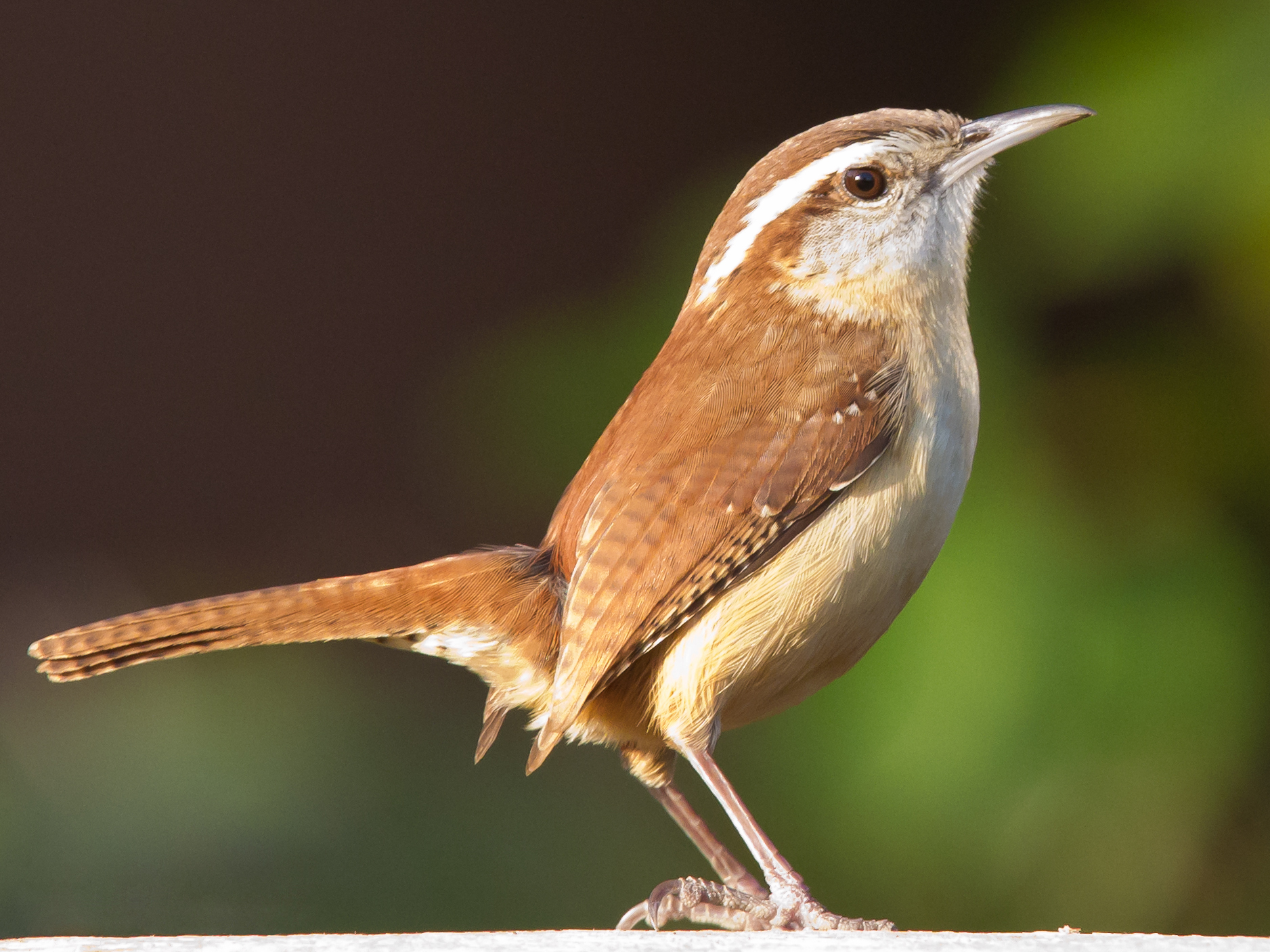
I've been in West Virginia for almost a year now, and luckily this spring I found carolina wrens nesting on the back porch.

Wrens are my birth bird, so to me they are so important.  I am born on Wren day, the 26th of December, and wrens were and are of great importance to modern, medieval, and early peoples living in Wales and Britain and Ireland.

And I love wren stories.  One of my favorites is from the Isle of Mann, "How wren became kind of all birds."  The story is how birds gathered to choose their king, and decided that who soever flew the highest would be king.  So eagle soared up above the skies, beating every other bird, or so it seemed.  A little brown hedge bird hid within eagle's great wings, and jumping on eagle's back, and so flying higher than all the others.  Even in modern day Wales, then, wren is still considered the king of the birds.

Wren day is its own holiday, now luckily involving a fake wren, paraded through town for tuppence and dancing and singing.  Scholars believe Wren day is the remnant of celtic myth, which required a sacrifice at the darkest time of the year.  Wren, who sings away at midwinter, was deemed the old year, needing to die for the new.  I prefer not killing wrens on my birthday, however, and prefer to focus on how the wren's name in Celtic language is connected to druidism:  dreathan, dryw, draouennig, all similar or in Welsh the same word as druid.  Druids purportedly searched for these hard-to-spot little brown birds, and seeing one meant the coming of wisdom.  Little wren, kind of the birds, bringer of wisdom, is a druid, with the loudest song per ounce than any other bird!

In augury, spotting the little wren is a sign of beneficence.  Bird kings bring good stuff and good luck!  Throughout Europe, killing wrens, taking their eggs, or bothering them in any way (except Wren day) was a sign of terrible ill luck.  Druids listened to the wondrous and famous wren song to make predictions.  Wrens denoted good fortune.

So, ok, all that is good.

I love wrens for so many other reasons, all non-celticy.  I love wren song, and I love wren work ethic.  In the summer I always have house wrens nesting about (here in West Virginia I have two pairs in the great 100 year old Chestnut tree), and I love to watch them building nests and singing with cheer and glee all day.  Male house wrens sing to attract multiple mates, and they build multiple nests to show their co-parenting prowess.  When babies are born, both parents feed the hatchlings all day long.  I love to watch them.

Carolina wrens like to nest in cavities, so they are harder to find.  Yet they still sing their delightful songs all day, and share co-parenting responsibilities just like their house wren cousins.  Carolina wrens greet the dawn with their "wi-choo, wi-choo," loudly out-singing birds that are three and four times their weight.  Then, like all wrens, they are singing and busy homemaking all the day.

It is this wonderful habit of wrens that makes them totemic.  If wren flies into your life, wren's busy days and loud songs represent a time to embrace action.  Wren is not a contemplator.  Wren is out doing.  So finding wren always signals a time to get up and do something.  Wren is also a great totem for speaking out!  Wren sings all the day long, letting the world know it is there.  If wren has come into your life, it is your time to sing your song.  Find your voice!  Say what you have to say!  Wren energy will support you.

But best of all, is just watching wren.  No matter how busy I am, I love to hear wrens in my garden, on my porch, in my trees.  Wren is here in West Virginia, and this just makes me happy.

For me, I guess, wren day is every day.


Thursday, February 2, 2012

Happy Imbolc Y'all!


Ok everybody, Happy St. Bridget's Day. Time to honor my puja to Bridget with a post!

I have spent the winter starting my own coaching business, working with special needs teens and young adults, and happily already have two clients. Yes I need more. I also needed a website (done!), marketing plan (done and evolving daily!), a business plan (done!), legal stuff (some done, some left to do), and a new phone (done!) Lots of hard work and hard planning. The coaching part is the easiest!

During this time of building and visioning, I have been following a mated woodpecker pair in my woods. Pileated woodpeckers abound here in SW Pennsylvania, loving the woods and streams of the Laurel Highlands. These are huge woodpeckers, too, 16 to 19 inches high, with a lovely red streak on their heads, and a call rather like a laughing hyena. I love them!

I see the woodpeckers most in the summer; they love the mulberries in my backyard, and flit from the woods in the hollow up to my yard, grab a berry, and fly back. They are huge, like crows with red, flying back and forth all day long on a June day. This winter, however, they have been hanging closer to my house, gathering daily in scrub woods at the back of my yard, and chittering together all day. I have been blessed to watch my pileated pair dancing in the trees! I called my local zoo to ask what pileated woodpecker dancing means, and they said that they had no idea. Ok.

So of course, with dancing woodpeckers in my yards, my augury spirit was called forth. What can dancing woodpeckers mean as a call from the universe or from Bridget?

There are numerous Pileated stories in First Nation myths: Pileated woodpeckers brought flutes and music to the Lakota; an Annishinabe tale credits the Pileated with helping a warrior defeat a giant, and the warrior put the giant's blood on the woodpecker's head in thanks. Woodpeckers beat out rhythm on trees, and are connected to drummers, music, and the heartbeat of the mother.

Woodpeckers are also hard headed. Their skull is reinforced with extra bone so they pound away at trees and find bugs, grubs and ants for food. Woodpecker bills are both tremendously strong and long enough to find insects. Woodpeckers don't sing to announce their presence, they pound instead.

For Cherokee teachings, woodpeckers are associated with discernment, learning to find truth, and knowing when to speak (pound on trees) or stay silent and still. Elder RedArrow calls Woodpecker the teacher of personal truth, persistence, hard work and honor. Woodpeckers have the ability to discern truth from lies, and to find hidden secrets with their excavations of trees for their nests.

While I spend this winter watching the pileated pair in my yard, I am holding hard to their message of persistence and hard work. I am building a new career that is flexible for my family, and hard work and following inner truth is something I am determined will pay off! Woodpecker, then, is leading me in hard work. As Elder RedArrow says: "Woodpecker is telling us that even if something seems difficult to do, not to give up. To do what works, even if it is unconventional. To set your own pace, your own rhythm."

My own rhythm is something I clearly appreciate! When I first read that woodpecker represents drumming, I was not sure how to understand this teaching. I don't like drumming; I like - no love - to dance to drumming! And I see myself as dancer and weaver and not drummer and musician. (Not that gazillions of musicians aren't part of my life!)

Yet Woodpecker augury for me this St. Bridget's day is a message of persistence. Of not giving up. Of hanging in there and following my own inner drummer. I am building so much these days, building a new life and new vision of my world, and every time I am tired and walk into my back yard, Pileated Woodpecker is there, calling me on, dancing in trees, laughing and calling me and pounding on for truth.

This Imbolc, I am listening to Woodpecker. And Woodpecker is telling me to listen to myself.

May you find this sacred day special and prophetic; may you find your inner voice in the fires to sacred Bridget; may you follow your path.

Happy Imbolc.

Sunday, August 21, 2011

Wrens on the porch

I can't believe it has been two months since posting here on my blog! However, since last writing I have (only just) finished the hardest semester of my life; Assessment and Curriculum for Autism and Experimental Analysis of Behavior almost killed me this summer! I am happy to report that I am alive, and have straight A's for the summer. Phew. I really did have days I thought I would flunk out and never finish either course, though.

Sustaining me all summer were wrens. My children have all decorated bird boxes over the years, and I lovingly hang them about the front of my garden by the porch. Many years house wrens next in the boxes and I love their cheerful song all summer! (House wren song can be heard here!) This year was extraordinary, however, with three male wrens all nesting in the boxes out front, along with chattering babies and mates busily singing their hearts out! Three wrens, with the lovely connection to Celtic wren traditions and the perfectly Celtic number of three, had me searching information on wren traditions in Celtic life and myth.

I already knew I had to write a blogpost about the wrens, King of the Birds in Celtic folklore. Wrens have to be sacred to me: I was born on Wren Day, Dec. 26th! I know some lovely boxing day songs about hunting the wren, and less lovely traditions about hunting the wren on Wren Day, and parading the little dead bird around the village. I suppose the only consolation is that other than Wren day, killing wren's was and is still considered unlucky throughout the Celtic world. Around my house at Yule, "the wren, the wren, the king of the birds" is a common song!


Then a few weeks ago I spotted another bird - a wren, but not a House Wren nor a Carolina Wren. This wee one kept hopping onto the porch railing and looking right at me, before flying away. Okay. What can wren be telling me, especially this new and unusual wren? Quick run to my Druid Animal Oracle tarot deck, a fun deck I use when readers want an animal totem tarot, and I read Philip Carr and Stephanie Gomm's take on wren:

"Drui-en allows us to glimpse the beauty of God or Goddess in all things. He tells us that "small is beautiful" and that self-realization lies not in grandiosity or apparent power, but in humility, gentleness and subtlety. Cunning, if tempered with humour and good intent, is a way of achieving great things with an economy and effort, and a rational and honest use of the achievements of others."

Well, that is lovely. I like to think of myself as cunning and beautiful! I certainly feel I have humour and good intent. I recommend the Druid Animal Oracle Deck because it does a lovely job of synthesizing multiple Celtic traditions and distilling them into modern thought. So I thought about my wrens, and every morning sat working on homework while the little ones sang their hearts out for me.

The little and unknown wren visited again and again. Who could this be? Pulled out my birding books to find him: a Winter Wren, down to summer here from Canada! Yup, the Winter Wren of Celtic myth, here on my front porch. Winter Wren stories abound for the Celts. The Welsh mythological hero Bran the Blessed disguised himself as a wren to chase cock Robin in old stories; on the Isle of Mann mermaids change into Winter Wrens to escape capture. In Scotland the Winter Wren is connected with women, healing and wisdom, and a nickname for Wren there is "Lady of Soul's Hen." In Welsh the word Wren itself is dryw, the druid bird.

Winter Wrens can also be associated with Mary. In the fabulously researched Hunting the Wren by Elizabeth Atwood Lawrence, she points out that another name for Cutty Wren is Jenny Wren. She re-creates the famous Christmas Carol, The Seven Joys of Mary, as The Seven Joys of Jenny:

"The first good joy that Jenny had
It was the Joy of one,
To see the power her nesty had
To make to speak the dumb.

The next good joy that Jenny had
It was the Joy of two,
To see the power her nesty had
To make the lame to go.

The next good joy that Jenny had
It was the Joy of three,
To see the power her nesty had,
To make the blind to see.

Chorus:
To make the lame to go, b..... boom
And blessed she may be,
Both birdy nest and loving song
For every night and day."


So. A week ago I finished my last extra credit assignment to get my second A for the summer semester - and I got that A by only one little point. But one point was enough. I have approached homework all summer as spellcrafting - trying to do work daily and keeping my nose to proverbial grindstone. When I felt overwhelmed, I forced myself to sit down and do some concrete work. Daily. I didn't want to do those last extra credit points, but knew I might need them, and only two weeks ago sat down with a sigh, to grind out some more work.

Ok. It all paid off. I am proud of my A's.

And I'm still recovering, too! Fall semester starts this coming week. Eek! I would like a summer off!

So I sat on the porch this morning, drinking coffee and enjoying some bliss free days without homework. My front garden is a mass of weeds; there is laundry from our family's campout (I came back several times a week from camping to do work and my last final exam; there is schoolwork I need to do for the kids. But I sat and rested on the porch, watching for a deer family that has been lurking about all summer, and enjoying the now liberated House Wren parents, as the fledglings have grown and moved on.

And what happened? The little wren flies onto the porch again. And flies onto my window sill by my elbow, and then, a first for me, flies onto my ankle. The Winter Wren sat on my ankle! The Winter Wren cocked his head, looked right at me, and then lightly flew away.

I am now a year into my Celtic augury studies, and this experience today has blown my mind. A blessing for me, any bird willing to perch on my body. And the famous Winter Wren of so much lore, and my birthday bird to boot, sat on my resting ankle, looking at me, signaling something on a brilliant August morning.

I plan to take my blessing from the King of the birds, and hold the memory to savor as my semester starts again. Wrens are such little and beautifully marked birds, tiny singers of majestic songs (pound for pound, the wren's song is ten times louder than a rooster's!), and in folklore connected to wisdom and healing. Like Bran the Blessed, they are sacred birds.

So I had a messenger from the deity on my ankle today. My thanks to wren; I am so deeply grateful and touched by your visit.

Wednesday, April 20, 2011

A Return to Hawks


Last year at this time I wrote about the Franklin Institute Hawk Cam and Celtic Augury. I continue learning as much as I can about augury; however, this year I am watching hawks nesting, not online, but in my own backyard.

Two young Cooper's Hawks started building a nest in one of my silver maples, and for over a month now have built, guarded and roosted their, I suspect, very first nest. Thus I have auspicious birds right out my kitchen window! Yes, gentle readers, this is awesome!

I have also been learning more about Celtic augury and not just my Cherokee traditions. Folks over at Tearlach Roibeard Luder's yahoogroup Celtic Nation steered me and other learning augurs to the wonderful book: Birds Of Ireland: Facts, Folklore and History, by Glynn Anderson. In this great resouce, Anderson writes of hawks:

"In Ireland, Hawks were connected with the willow. They were regarded as messengers between this world and the "Otherworld." They symbolized clear sightedness and deep memory."

The only common hawk in Ireland is the Sparrowhawk (spiorog), a smallish hawk that feeds on insects as well as small animals. They are more clever at hunting than our larger Red Tail and Red Shoulders hawks here in the states; due to their small size they are more likely to imitate smaller birds when hunting, in order to get close enough to strike. Anderson notes that Gerald of Wales in his 12th century voyages to Ireland commented on sparrowhawks, and that the 14th century play The Colloquy between Fintan and the Hawk of Achill, features hawks as the oldest of all creatures, and thus the wisest.

As has happened before, I am gobsmacked at the similarity between Celtic beliefs about hawks, and my own Native American family traditions. Hawks were taught to be as auspicious due to their ability to travel to God, a somewhat Christianized version of how to name holy. By traveling from God to earth, hawk brings messages of luck and good fortune from God's realm. I was brought up to pay attention to hawk.

Over and over, in world traditions, hawk is a messenger. The Egyptians held hawks sacred, as Ra assumed hawk as one of his forms. In Welsh Arthurian tales, Gawain was called Gwalchmai, "the hawk of May," and in early Welsh stories, Gwalchmai is a well known warrior. Later in Wales, St. Bartholomew was angered when a hawk killed a seagull, and caged it, but could not stand the hawk in captivity and finally set it free to return to God. The Aztec peoples descend from a snake-eating birds, and in Aztec culture snake hawks were worshipped for connecting to this auspicious ancestor. Hawks go from world to world.

Now the hawks in my yard are fairly busy - adding to the nest, roosting, guarding the nest. So far I haven't seen them off to Ra or the snake-eating bird of Aztec ancestry. But I do see them, morning and night, winging over my head and hunting high above the ridges here in the alleghenies. On the rare sunny day this spring, I see them flying thermals while hunting across the hollows, and they can fly up and down the mountains while I, rootbound, garden in my seemingly huge yard, which to the hawks must seem as small as a postage stamp. On those lovely days, the hawks are flying in heaven, indeed.

And I admire their work. They are new at nest building, rather as I am new in college and a new career, and i feel a common bond with this work of creating a new life. Soon those eggs they are roosting will hatch, and then I know what they are in for, having reared three kids of my own in my own nest. Yet soon enough the hawk fledglings will be ready to fly, as my own are approaching their own nest-leaving as well. It may be a shorter season for hawk, yet this new world of nests and flying free is a part of us all.

Despite a freeze warning here in the mountains tonight, spring is coming. Birds are nesting. Hawk is in my yard with a message of new beginnings, and while I and my kids work away, we are all building a freer flying world.

Watch for hawks, gentle readers. Sometimes they show up in your own back yard.

Saturday, July 3, 2010

More Celtic Augury


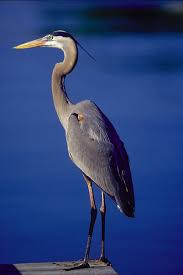
"Mom, stop the car!" yelled my youngest, the budding ornithologist, "it's a huge bird!" I screeched to a stop, luckily with no one behind me, and backed up to see why my kid was screaming. Well, gobsmack me! "It's a heron," she was yelling, and she was (of course) right. Two houses from our great big barn of a home, a great blue heron had landed on our neighbor's rooftop! It stood there, walking up and down the ridge sedately and deliberately, while my youngest and I watched it in awe (our neighbor came out to join us, wondering at first why we were staring at her roof!). After 10 minutes, the heron flew up and away, as only a heron can, with its full six foot wing span and graceful mien.

Astonishing.

Now herons are no strangers around here. None of my neighbors keep koi, as what is the point other than as heron bait? Nearby creeks feed down to the Youghiogheny River, where herons find plenty of food. I see herons every week or so, winging over from creek to creek.

Yet this was the first time a heron has stood nearby on a house. That surprising action brings the bird from simple friendly neighborhood bird, to a visitation from the spirits. And so, budding augur that I am, I rushed my kid to the pool and sped home to learn what in heaven's name a heron might mean.

Off to some mythologies. Herons are connected to the Egyptian Ra, seen as a form of resurrection and renewal, a speaking metaphor for me these days. For the Greeks, heron was sacred to Poseidon, and was one of Athena's divine messengers - rather like hawk for the Cherokee. Early Christians saw the quiet hunter heron as a metaphor for contemplation and prayer. And in China, heron is a symbol for longevity (ok, I like that!)

In Wales, herons and storks are Creyr. (Say "cray" as in "crayon" and "ear" as in, well, ear, plus, if you can, roll that final "r," and that is the Welsh.) Blue Herons are Creyr Glas. The word "creyr" is akin to Welsh words for create and creation, and more loosely, innovation. (Thus there are many corporations in Wales that use creyr as part of their name!) Creyr, the heron, is a giver of and a symbol for life.

Creyr pops up all over Welsh legend. Rhiannon and the Lady of the Lake both change into herons, and heron was associated with the secrets of life. (Often heron keeps the secrets of life in a little bag under the water, which explains why it stands on one leg). Christians took both stork and heron to symbolize St. Columba. Intertwined herons and storks are common in the Book of Kells and other knotwork. Double laced herons can represent the constant relationship between the otherworld and our own world in the more physical realm. In knotwork, they show the constant interaction of both worlds, forever around us and part of us.

Creyr in my life seems completely appropriate. My home life is changing rapidly, as kids get older and as two of my special needs children are thriving with less and less services. I am back in school, planning new businesses, and hoping to actually get out and meet new people sometime soon! A year ago such changes were impossible. Now the changes seem scary, yes, but, like creation itself, also exciting! That heron on a neighbor's roof is a challenge to me, and a reminder of innovation. Rearing special needs kids has demanded endless innovations, creating new definitions of family and partnership. The goal was always - and still is - what is best for my children.

Yet suddenly Creyr appears on rooftops, at the same time creation seems not yet to be done with me! Somewhere in the work with my children these many years, they have somehow birthed a new me. And that me doesn't seem to be able to stop growing.

Perhaps heron is a invocation to us all. After all, creyr turned up just before last week's lunar eclipse at the full moon! Heron can be a divine messenger for everyone, urging on each of us to create anew. I asked about gardens just a few months ago, wondering what my gentle readers hoped to grow in their yards and window boxes.

Heron asks humanity a new question: what is growing within you?

Tuesday, May 4, 2010

Trusting Hawks and Celtic Augury

I wanted to reclaim my Cherokee ancestry back when I was in college, and have tried to study some Cherokee traditions for many years. Some traditions lasted in my oh-so-passing family, especially about plants and animal lore, and one cultural tradition that my family did pass on to me was to watch and follow birds. Birds as messengers, birds as bringers of fortune, birds as signs of weather and seasonal cycles, all were part of my childhood. Later, in the UK and Ireland, I learned more of Cornish, Irish, Welsh and Scottish bird lore, and thus began my still ongoing studies in augury.

Augury means divining the future from the study of natural animal movement. Birds have been especially important in multiple cultures - the Romans had entire religious orders established around reading the auspices. (In brief, mark out a field - called a templum, build a camp, call in flutists and harpers, draw the auspices - which means dividing the field and sky into sections that indicate signs and derive their powers from the gods, light a fire, throw in incense, play the music, and wait for the augur to make a pronouncement.) Bird lore, often as intensely complicated, exists world wide. (You can watch bird tracks, bird flight, bird nesting, bird migration, and of course those infamous bird entrails.)

I was brought up to believe hawks brought luck. The bigger the hawk, the greater the luck would be (sorry Cooper's hawks!). During one of the hardest times of my life, when dealing with my infertility, the one thing that kept me going was the many hawks here in the Allegheny mountains, including the Red Tail that lived in my woods during those ugly years of fertility specialists and awful drugs. I walked daily, and saw that Red Tail daily, and held on to the signs that somehow in all the ugly infertility mess, the auspices were auspicious! Certainly that dreadful time was especially marked with daily Red Tail sightings, a record number of hawk visits that still stands out in my life.

(And now, 16 years and 3 adopted children later, I have to admit that that neighborly hawk was absolutely right. The signs, though I couldn't see them through the treatments and sense of failure, were auspicious indeed: apologies, gentle readers, but I have the best children in the world!)

Early on, after my eldest's birth, I remember seeing the red tail (though I still walked daily, with babe in sling) less often, but offering my prayers of thanks to her when she did wing by. Hawks lived on in our woods, Red Tail, Cooper's and Harris, and watching them for signs of luck became second nature. Unsure of my road ahead, I watch hawks when I take job and school applications to post; feeling overwhelmed with work, kids, school, church, I take comfort from hawks perched on street lights overhead. A hawk winged above on the way to dd's music competition this past weekend, and yes, she won. Hawks and I have a special bond.

And yes there are other birds. I am deeply connected to my beloved carolina wrens; here on the northern edge of their range, carolina wrens need my feeders to get through cold snaps, and I need their bug-eating to survive summers of chiggers and mosquitos. Little brown flit-flits, carolina wrens are happy, cheerful and domestic, busy with their small territories, busy rooting out bad bugs and keeping woods and garden neat and tidy. For work at home moms like me, carolina wrens are soul mates and happy reminders of the importance of home and hearth - and hearths, of course, are ever sacred not only to children and pets, but also to Bridget. Since I hear endless comments of the "oh you don't really work" variety, the cheerful companionship of wrens is an endless source of support.

The easiest way to learn augury is to begin watching birds. Hang some bird feeders, spend time outside watching trees and sky, and start checking out what the birds evoke in you. Hawks meant luck to Cherokee traditions, but hawks may mean something else to you. I have a good friend who loves ravens; many, many friends love owls (we had a barred owl waking us up all winter), and my youngest daughter loves the cheerful and talkative chickadee. All of these birds bring different messages and different auspices.

You can take augury to more complicated heights. Drawing a templum on land or sky, and dedicating, say, the NE corner of your yard to Bridget, adds meaning to bird sightings in that area of your yard. A crow in the NE corner could then mean some trickster energy in your hearth, inspirational life, or your crafting. Crow energy is ever fun to translate and predict! (Or you could see that oh-so-social bird as indication of a future handcrafting party. . . or connected to Morrigan's ravens and indicators of battle. . . )

Dedicate the SW corner of the sky over your home to Cailleach, and an owl flying there at daybreak could mean dawning wisdom. Or from Cherokee and Creek traditional beliefs, an owl would mean approaching death. Back to me and my wrens, in many Welsh legends, wren is the trickster, often wise and vanquishing other birds. Of course Boxing day, is the day of wrens, the King of the Birds in so many legends. So put the wren in that SW corner dedicated to Cailleach, and you have a message of intelligence, wisdom, trickery, and kingship!

Augury, then, requires only two things: learning bird lore, and practicing. It is thus one of the cheapest of divination practices, and also one of the most personal. (Perhaps carolina wrens have an utterly different meaning for you. . .)

Augury also brings us to tending, that oh so Bridget activity. Birds, like our planet, are in increasing trouble. Tending to the planet, to the pesticides on our lawns and the chemicals in our foods, is the only way we and our birds will survive. I keep my small two acres organic, and a safe haven for birds escaping my Scotts lawn, shrub trimming neighbors. My yard is a Back Yard Habitat, certified by the National Wildlife Fund (which offers a sign for sale after you get certified, to show your neighbors why you only mow twice a month and never trim your bushes at all. . .) Putting out small offerings to the birds, from peanut butter or lard on stale bread, to pine cones trimmed with sunflower seeds, to hanging old apples and oranges, all are not only offerings to the birds, but as messengers to the gods, feeding birds is an offering to the holy.

And the results are neverending and profound. My youngest, budding ornitholigist who knew the names of about 20 backyard birds at age 2, and I have fallen in love with the Franklin Institute Hawk Cam where two parents are daily caring for their three nestlings. Youngest and I have spent the spring watching the mom lay 3 eggs, watching the long and boring nesting, and screamed in delight when the 3 eggs finally hatched. Now the nestlings are growing quickly, and youngest and I worry daily that they are going to fall from the nest in downtown Philly, as the fledglings start to explore their wings. It is a daily drama to watch the 3 baby birds wiggle near their nest edge.

My eldest, however, has no patience for this. Eldest is my warrior, interested in swords and battle and black belts. Hearing me and youngest bemoan the birds antics, my eldest offered this pearl, which I now share with you:

"Mom, just trust in the hawks," eldest told me, hands in the air for emphasis, "just have faith in the hawks."