Showing posts with label Bridget lore. Show all posts

Sunday, January 27, 2019

Returning to Imbolc

Gorgeous pic by Luisclas at pixel.com


I told my family that I was dedicating more time to Imbolc and St. Bridget's day this year, after many years of working hard to keep kids in college and build a new business and raise two new puppies...  all good things.  Yet Bridget puja has been sitting in the back of my life, and I am re-invoking my Bridget contract as I start this new year turn.

When my kids were little we celebrated St. Bridget traditionally - for the folk of Northern Europe and America, winter meant the loss of milk from cows, sheep or goats, the loss of butter making and fresh cream; chickens would quit laying eggs and dishes requiring dairy and eggs had to put up before the solstice, to store for the long months ahead.  During my years in Wales, I can attest that February 1 is lambing, despite cold and snow, and I was blessed to head out to pasture and watch my Welsh cousins search for ewes lambing in the snow (oh it was cold!).
Paul Selling at pixels.com
Yet lambing meant milk and a return to things like cakes and sauces that we now take for granted.  So to celebrate, my kids and I gave up milk and eggs during the weeks of January, to celebrate the return of mothering and milk on St. Bridget's day.  (How long my kids could survive without dairy depended greatly on their age and interest!)


Taking away dairy during the cold month of January is a hard thing to do, even in modern times (and my vegan friends can delete their vegan butter and milk for the same idea...). We live in a culture here in the US that is so removed from farm life and cycles of nature.  I am in a rural state, 87% forested, and most of the families I see have no garden, no chickens, no livestock.  The coal industry and now the gas industry have ripped families from the land where they have lived for generations.  Milk here is mostly imported from China, sold at Walmart.  The sense of our land as a magic place of forests, birthplace of rivers, home to elk and cougars and hellbender salamanders, is lost to most families.

Most families I see also live removed from the cycles of light and dark.  Driving home through forests, I can see the light returning as the year moves into February.  It is still light at 5:30, when at winter solstice the sun went down long before then.  In the morning, the dogs are crawling out of bed earlier and earlier - in this crazy winter of melting arctic and cold then hot weather - cardinals were calling on the holly outside all week long.  I heard wrens the other morning.  I sip tea alone in the morning while my college neighborhood sleeps unaware of returning signs of spring.

There are so many ways to celebrate Imbolc, St. Bridget's day, Candlemas.  The festival of milk, of light, of Bridget, Celtic goddess of smiths, poetry and foster care, the return of spring, all come at the beginning of February.  The list of ways to celebrate are endless:  drink milk, bake cakes, light candles, make candles, clean your hearth, clean your kitchen, make St. Bridget's crosses, rise and pray to the sun, welcome Bridget to your home with Bridy dolls in her honor.  An excellent article for celebrating Imbolc is at Gather Victoria.  Or invent your own method to honor Bridget:  I continue in my ongoing care of so many children and teens, honoring the foster mother guise of Bridget, and I celebrate her feast day working to bring justice to children.  Here in the US, work to end the separation of immigrant children from their parents, of stopping trafficking of children, or help a child in need would all be ways to honor Bride.


For my father, February is the month of seed planting.  In Tennessee, he will be setting out broccoli and kale by the end of the month.  The seed catalogs coming to my door announce that our connection to this planet - to growing things, to pollinators, to clean air and water - all still matter.  Bridget's Fire is a happily eclectic bog about women, religion, faith, action, spirituality, reclaiming women's religious traditions, finding spiritual paths, creating and saving the world.  In that light, Bridget's day, a feast to a Celtic saint and deity, a woman Bishop in the historical church, a representative of welcoming, hospitality, blacksmithing, poetry, women's religious community, women's power, foster mothers, milk, and light, can all be celebrated in any way that connects women to power, the earth, growing things, building a better world.

pic by MarcusSpkiske at pexels.com


I am returning to a dedicated Imbolc this year.  Light is returning.  Ewes in the northern hemisphere are birthing lambs.  Soon, hawks will next.  Seeds will sprout.  Take St. Bridget's day, and commit to whatever you want to grow this year, and commit to nourishing yourself and your handiwork.

Saturday, November 21, 2015

Do not neglect to show hospitality to strangers, for thereby some have entertained angels unawares.


Irish Immigrants coming to America 


I am re-visiting Hebrews 13:2 as the United States plunges once again into anti-immigration hysteria in the name of a Christianity that in reality ALWAYS called for inclusion of all marginalized people.  After the attacks in Paris last week, and despite the ongoing media denial about attacks in places like Nigeria and Lebanon, the fascists of America are calling for the end of Syrian immigration, the registration of Muslims in the US, and closing Muslim places of worship.  This intense fascist exploitation of the tragedies in Paris is typical for the right wing in America - and that is right wing politicians, who continue to harness Christian prejudice despite the fact that Christianity in its roots was not anti-immigrant.

Hebrews 13:2 is a beautiful passage from Jewish Scripture.  "Do not neglect to show hospitality to strangers, for thereby some have entertained angels unawares."  While keeping Jewish teaching, in Christian Scripture, Jesus came as a new law, calling for people to join together in the name of Christ, not in the name of any one nation or one empire.  Governments of the day were astounded and threatened when slaves and masters, Jews and Romans, people of Palestine and people of Greece and people of Egypt gathered together to worship in a new community.  If you read my blog at all you know I have posted about Coptic polytheism in early Christian worship, about Paganism in both early Hebrew and early Christian communities, about open communion in Christian worship, about the importance of extending a shared worship to all peoples and from all peoples.

I have also been thinking this week about my many Muslim friends here in the United States.  Sasha and Saheim are goddaughter and friend, both born in the US, and both Muslim.  Sasha babysat my daughter for years, after I babysat for her years before.  Saheim befriended me and my daughter at a convention in his hometown, and continues to show the hospitality of Islam in his every action and gesture of friendship to me and my teen.  One of my greatest teachers, Mark, another US citizen, taught Islamic thought in his business classes, encouraging students of every faith to see the connection between business and spirituality.  And I have known immigrants, and been the better because of them.  Growing up, Noor was a visiting scholar from Egypt, who sat threw many high school classes with me while her parents studied in my hometown University.  Later, Ayesha was a family friend, also studying here in the States, whose family embraced me and my children with special needs when many Christian Americans would not.

Islam is part of American life, from my family and friends, to the Rumi poetry I read daily on Facebook, to the Mosque in Pittsburgh that gave out food weekly to the poor.  When fascist politicians talk of registering Muslims, they are talking of American citizens, of visiting children and scholars, of refugees and of highly skilled immigrants.  I am seeing many, many articles calling on Americans to welcome Syrian immigrants, and to stand against anti-Islamic rhetoric.  But I want us to remember that most of already know Muslims, and that the Islamic communities of America are already integral to our lives.

Bridget's Fire has long been a blog about women and religion, from puja and Hindu traditions, to Christian theology, to Jewish and Pagan traditions.  I need to be more purposeful in including Muslim feminisms, Muslim spirituality, and the centuries-old traditions of Muslim hospitality and political activism for peace and justice.

But today I am invoking Hebrews.  The passage:  Do not neglect to show hospitality to strangers has deep roots in Western tradition.  Hospitality was central to the Bridget community in Christian Ireland, with open doors to all visitors.  Indeed, hospitality to strangers was a sacred value throughout Wales, Scotland and Ireland.  Celtic Christianity developed around monasteries, so the Christian believer in early Celtic lands had to travel to learn, to study, to pray.  Travelers required a welcome, and hospitality to a stranger became a cornerstone to early Celtic Christian thought.

The blog Godspace:  Spirituality, Sustainability, Creativity, offers a wonderful liturgy of Celtic Christian hospitality traditions.  They include the following traditional prayer:

We saw a stranger yesterday, we put food in the eating place,
Drink in the drinking place, music in the listening place,
and with the sacred name of the triune God,
He blessed us and our house, our cattle and out dear ones.
As the lark says in her song:  Often, often, often goes the Christ in the stranger's guise.

I invite all my readers, of any faith or none, to find ways to act in hospitality as a counter to the fascism surrounding us in the United States.  I also invite us to acknowledge and share the importance of our Muslim friends, family and neighbors, of Islamic traditions that shape our lives, of the importance of both American Muslims and immigrants of all faiths in the open table of hospitality that should be America.


Monday, July 6, 2015

Bridget Foster Mother

St. Bridget Spreads Her Cloak over Ireland by artist Cynthia Matyi


As an adoptive mom I have long identified with the the Christian Bridget's role as foster mother.

Medieval legend goes that Bridget, the goddess of welcoming hospitality, was at the inn where Joseph and Mary stopped - only to be shocked when they were shuffled off to the stables.  Bridget worried about the young couple,  having been magically whisked there from the shores of the Irish Sea.  In this aspect, Bridget is Miome Chriosde, midwife to Christ, banchuideachaidh Moire, aid-woman to Mary.  In the Scottish Highlands version, she sees a lamp in the stable and goes to help deliver baby Jesus.  In multiple Irish and Welsh tales, she is Christ's later foster mother, a hugely important role in medieval Ireland and Wales, where foster mothers took on the education of their foster child at the age of seven.  In these stories, Bridget becomes a sacred teacher in the medieval tradition, guiding her foster child into apprenticeship and miraculous career.  Dennis O'Neal in Passionate Holiness:  Marginalized Christian Devotions for Distinctive Peoples notes that no other non-Biblical Saint has been connected to both Jesus and Mary as Bridget has.

Since I've been a mom, I've lived in a different culture, one quite uncomfortable with foster parenting and adoption.  Common questions I've heard over the years include, "where did you buy your children?" and "are those kids really yours?" and "don't they want their real mothers?"  At the same time, schools have refused to enroll my daughter, lawyers told me I would never get custody of my children during my divorce, and even old friends from church questioned if I had a right to parent as a single mom after the divorce.  "It's not like they're really your children," said one Christian friend.  The sacredness of Bridget, as Christ's foster mother, is lost in modern America.

Now with two college kids on my hands, and one high schooler, the questions over the years are somewhat moot.  My kids can tell you who I am, that annoying person insisting they do homework and finish semesters.  Their friends think my dreds are cool and I am all together an embarrassment.  Proof of real motherhood if there ever was one!

But in my work in West Virginia, I am often solving one crisis after another.  As schools around the country become increasingly punitive, sending kids with special needs to juvenile detention and foster care is more and more common.  The same schools refuse federally mandated special education programs, and blame parents when children don't want to attend school.  At the same time, I drive up hollows to rural areas where no other service provider will go, working with wonderful children whose only crime is living too far off of main roads.  I am not a foster mother to these children and teenagers in the modern sense, but I am often working to secure safe and nurturing education and services for babies, preschoolers, kids and teenagers.  Along the way I have made some wonderful connections to so many families.  I love parents in West Virginia who work their asses off to get the best for their children that they can.

So in that sense I feel like Bridget foster mother.  From playing with a ten month old who is suspected of being on the autism spectrum, to coaxing a bullied teen with asperger's out of bed, I am working with kids who need someone who is professional and can advocate for them and for their parents.  Most of my work days I see amazing changes every single visit:  the ten month old smiles when I coo in her face; the teen sits up and talks about archery; the parents who worried about their children laugh and cry to see their kids learning and growing.  Watching families and kids change and relax and remember how to care for one another is a truly sacred experience.  

I remember back in the dark days when I started my counseling program, and again when I worked in crappy internships with punitive supervisors who had no idea how to play and teach real children.  It was scary to think that to support my own adopted kids I had to work in programs that mostly harmed kids.  I wanted so much to somehow continue giving other children and teens the freedom and support I give my own.  The professional world seemed stacked against me.

Sometimes I really did wonder if Bridget had somehow forgotten me, our contracts, my puja.  Or maybe she was busy with others, and had no more time to follow my little problems.

But now I feel awed and amazed at my work, and I can see Bridget the foster mother to Jesus in the lives I am touching.  I can name teenagers who are not in jail because of my reports, count toddlers who never talked who are now talking, list children who had no accommodations in school who now have supports.  I have helped families get better services, helped new kids start homeschooling, and helped other kids find better schools.  In Celtic society, a foster mother helps guide a child into apprenticeship and vocation, and I am helping kids make eye contact, speak, study things they love, and get everything from computers in their schools to parents who allow them their video games.  A teenager with greasy hair who makes eye contact and smiles and thanks me for having their video games back is a sacred thing, too.

So, I feel a lot of gratitude for Bridget.  Maybe she was busy with others while I suffered through my internships.  Maybe she did forget me while I was busy studying for certification exams that seem endless.  (One more in August.)  But somehow, all that difficult time led to doing this work now.  Dirt roads and nasty schools and isolated hollows and sacred children, sacred families, and the sacred work of protecting and mentoring children.

May the blessings of Bridgid the bright
Rest upon us, this day, this night,
I will kindle this fire as Bridghid, foster mother of Christ would
The Foster Mother's Name be on our hearth
Be on our work, be on our households all.

(Carmina Gadelica, Carmichael, 1900)


Saturday, June 6, 2015

What Is Your Name in Welsh? fun new poll!

Choose some of your favorite things about Wales, and find out who your Welsh name will be:


What is YOUR Welsh Name?


(pictures courtesy of the buzz site questionnaire)


Full disclosure:  I got Eleri, for impulsive and easy-going...  so like all of these polls, take them for fun, not anything serious!


Friday, June 5, 2015

Moving Bridget to West Virginia

Long time no see, gentle readers.

And what a time it's been.  I have finished my master's in counseling, my graduate certificate in autism education, my required courses for certification in behavior analysis, and 2600 hours of (annoying) supervision.  I am now moved to and living in West Virginia, where I am a provisionally licensed counselor under supervision, a Board Certified assistant Behavior Analyst, and an intern with West Virginia's early intervention program, Birth To Three.  I work in every state in the county, providing services to families impacted by autism, trauma, or often, both.   I'm in coal fields one day, high mountains another, and up hollows, down creeks and over rivers.

I love it.

I'm also about to be married to a wonderful, bisexual man, and professional partner.  My soon to be husband actually taught some of the autism therapists who would work with my kids!  Synchronicity!  And I have a new step-daughter, five dogs, my daughter's snake and lizard, and a huge, dilapidated fixer-upper Victorian with a wrap around porch, yellow at that.  Yes, and a partridge in a pear tree.  After mucho neglect in the puja department, I am spending June, finally, getting my Bridget garden moved to the state of mountains.

Today I put in tiny little St. Brid's Combs into my front garden.  Also known as betony or Bishop's Wort, (perhaps honoring the fact that Bridget served as Bishop in the Celtic Church), it is a sign that my puja life is here in my new home.  I've got some mugwort potted up to move down the mountains here to the central Alleghenies, and I've added lots of lilies - white for both Bridget and Mary.  Angelica, ragwort and Queen of the Meadow, those lovely and wonderful six foot tall plants, may have to wait until next year, but I'm also adding lots of St. John's wort, just for the lovely little flowers of it.  I have two circles of three with the betony, one in front and one in back, and plan to move three more.  Three three's for a lovely triple goddess set of nine.

Now with homeschooling the kids (I fought long and hard through a bitter custody battle to keep my kids out of schools), working all over the state, and still working on my license and certifications (my BCBA exam is in August!  Prayers to Lugh!), my puja time got lost.  I also now find myself living and working with a wonderful atheist man who questions all religion as bunkum, and finds himself marrying omnireligious me.  It has led to hurt feelings on both sides, and I have struggled to figure out how to honor my work in behaviorism and my own religious commitments.  And add my 16 year old a-theist son, and puja has been hard to do.

But I am working on it.

So today is plant the Bridget puja garden day, with sunshine, mixed with great thunder clouds.  Here in the mountains weather continues its crazy course, and I have many reports to write and things to do.  But I am putting puja into this new world.

Hello West Virginia.  Puja to Bridget has arrived.


Monday, February 20, 2012

What to do when a deity rides your ass!


Sorry for the crass blog title, but for the last week Bridget herself has been on my case - usually around 4:30 a.m., and sending me Her message for my life. I am in my semester homework cycle - ahead, but barely, and starting my coaching business in earnest, and driving my teen all over Ohio to music schools so she can audition for college. In other words, Bridget I am busy! I need my sleep! Can you not just hold off?

I've had other deities visit me; Lugh showed up a year ago or so. I had offered my usual Lughnassad bread and beer for his holiness, watched the fireflies come out as you do on an August 1st night, and never thought much about it. Suddenly on my porch I had Lugh himself sitting down, taking his beer, and quietly hanging out with me. I wrote about my experience with Lugh over on Celtic Nation, and was met with some skepticism. True, I am not a huge Lugh follower. I think much of the skepticism came from the boys, all saying - covertly - what would Lugh wanna do drinking beer with silly little Bridget worshipper you? No one at Celtic Nation had ever doubted my relationship with Bridget or Aengus.

Anyway, Lugh has hung about and been a quiet and calm presence this past tumultuous year and a half - 4 school programs (two down, and two to go) plus starting the business, returning to part time work and the usual of rearing two kids with autism spectrum disorders. I think Lugh has been lovely in lending me energy. He is still about, and shows up for beer or a quiet break from his life. If you don't believe me, oh well.

Bridget showing up is no surprise. She too has been in my life since my visit to the Orkney Isles when she was the world all around. Bridget leads me in my mothering, in my poetry, my blacksmithing, and now my work as a healer. I mean, I do what Bridget does. Of course she is my deity!

Her appearance last week, however, was neither warm nor nurturing. At 4:30 a.m. she would flood my dreams and then my waking pre-dawn self with blogpost ideas for my business website, with story ideas, with magazine articles that need writing, with ebooks to write. Writing writing writing. Bridget has a message and she is using me to get it out there and she doesn't care about my sleep.

After three days of her early morning wake-up calls, I finally got up and re-vamped my business website completely, added new categories and pages, and most importantly, talked about the spirituality of rearing special needs children. The minute I wrote that post, offered coaching for parents of special needs kids, and planned some upcoming parenting workshops for spirituality and prayer, she eased off and let me get some sleep.

So whadda ya do when a deity rides you like this? Well, the simple answer is do what you are called to do! Lugh says hang out and have a beer, and who am I to argue? (Lugh may hang about 'cause I am so happy to give him mine!) Bridget wakes you at 4 a.m. and says write a blogpost, just do it. It woulda been better if I had gotten up that first a.m. and written every idea down right then. Sure more ideas came, but after three days of re-writing - and early wake-ups - I finally got the words down that Bridget wanted, and her insisting presence moved on.

Deities come and speak to us. Angels send us messages. Spirits lead us to classes and teachers and friendships we need. Saints send us poetry. When a deity rides your metaphorical butt, the best thing to do is ride your muse, follow your inspiration, heed the call from within.

And be ready to follow again, 'cause once you start puja to one Saint or Deity, be aware, more will always follow.

Here's to your sleep! Follow your spiritual path! Some days, sleep is not as important as the work we are called to do!

Sunday, September 11, 2011

Helm Magic


We have been back from our family's annual camping trip to Pennsic for a few weeks now, and I need time to write a post about helm magic. Pennsic is the annual, worldwide gathering of the Society for Creative Anachronism (SCA), when this year over 13,000 people camped out for two weeks in sweltering August heat in Southwestern Pennsylvania. As I have written before, it is impossible to explain Pennsic completely to one who has never been: it is 13,000 people camping in a huge, open field in August; it is 13,000 people recreating the Middle Ages from archery to brewing to period campsites to reconstructed bog-finds clothing to men, women and children wearing shining armor and bashing one another with PVC weapons. Really.

My kids drug me into the SCA, again as I have written before. They all enjoy youth boffer fighting, that shining-armor/hitting one another with pvc pipe sport, that, thankfully, is wonderfully and safely taught in our barony (yes there are kingdom and kings and queens and barons and baronies and dukes and all. . .) by the fabulous Lady Zoe. (If not for Lady Zoe, I would have overruled the kids and never allowed them near a boffer!) At Pennsic, the youth fighting is carefully and lovingly overseen by a group of men and women knights, whose dedication to the sport is awesome to behold. Yes, many of the adult fighters are walking around semi-drunk; yes the adult fighters, especially some of the guys, are annoying and pushy louts; yes I think grown men need to think about why they like to put on stainless steel in 90 degree heat and bash one another on the head (no I don't question the women in armor as they all tell me the same thing: they love hitting men - and who can argue with that?). Yet the youth fighting knights are all loving, giving, and dedicated to helping youth learn the sport and chivalry itself.

So pacifist, feminist me spends two weeks each summer watching my kids don their armor and hit each other. Ok, the first year or two I went to every fight and sweated every knock they each took - not to mention being pulled in as a marshal (in other words referee) when occasion demanded (I still have a reputation as being useless at teaching fighting but also as having been scrupulously fair and hard on everyone - a reputation I rather like!), but nowadays they are old enough that I don't have to supervise anymore. I have also watched my eldest daughter and my only son grow tremendously in the sport.

For many years, my eldest was the only girl on the youth battlefield. The boys treated her terribly. In boffer fighting, the hittee has to "take their blows," and it is all honor system as to admitting whether or not you the hittee has taken a blow that kills you. "Not taking your blows" is unchivalrous, an insult, and ultimately will draw unwanted attention from other fighters, parents, and finally the marshals.

For many, many years, boys would not take their blows from my eldest daughter. Yet the boys' behavior was so obvious, and my daughter so reliably took her own blows, that year after year she has won awards for her chivalry and behavior on the field. Now, since my eldest is at least 50 lbs. lighter than the boys on the battlefield, her ability to win even when everyone is as chivalrous as possible is limited, and she would dearly love to win some tourneys due to prowess and not just her amazing chivalry. Yet, year after year, she has stuck to fighting, won tremendous respect from many of the more serious boys, and also won tremendous respect from the knights in charge. In my own schoolwork this year, when the work has been overwhelming and the possibility of ever learning all this vocabulary and theory seemed impossible, I have deliberately thought of my eldest, hanging in there at every practice, taking her blows, losing over and over but not quitting just from the sheer love of the sport. My eldest is an inspiration.

And so to helm magic. Pennsic, that wild and indescribable village/ren faire/art festival/camp out combined, has its own magic. One of my kids' friends is an avid musician, has mild ADHD and is often difficult to manage, but has and still loves Pennsic and the SCA with utter abandon. Over the years Pennsic musicians have gifted him with musical instruments for his Middle Eastern persona, from a gift scholarship for an oud two years ago to a saz this past Pennsic. Giving to kids who show their willingness to work is part of the SCA culture. And it can bring amazing experiences! Last year I was shopping in the marvelous, amazing, gobsmacking and huge marketplace (picking up some badger's claws, the kind of thing one can do at Pennsic!) when my eldest daughter came running into the tent where I shopped. She was sobbing and incoherent and clutching a helm.

Helms, by the way, are just what you think they are: those helmets from knights in shining armor movies we have all seen. That shiny helmet is the piece de resistance of a good knight. In the SCA helm rules are strict and affected by modern medicine: hockey helmets work with some additions for chin and neck protection. Of course, your adult and youth boffer fighter dreams of a good, metal helm, though. Getting helms, visiting armorers at Pennsic and trying on helms, decorating helms (animal tails and horse manes are popular) - all are daily points of conversation.

The helm my daughter carried while in tears was stainless steel, a step up from my daughter's older helm which rusts endlessly. It was also quite small, fitting for my petite daughter's head, but not many of the fighters in the SCA are as small as my daughter. I hugged her while adults gathered around and my daughter explained through her tears that an armorer she admired had watched her try on the helm over and over all Pennsic, and here in the last days, had decided to give her the helm since she wears fighting favors and medallions and clearly is an active youth fighter. The helm itself was worth several hundred dollars, an amazing and magical and loving gift. Just finding a helm to fit her was itself amazing, let alone having the armorer give it for free! My daughter didn't know if she should accept such an expensive gift, but all adults there and in our barony camp reassured her that yes, giving away is part of the SCA and part of Pennsic. My daughter, the one who hung in there never winning year after year, was getting another kind of recognition for her love of boffer fighting. That in and of itself was a day of magic, and I have written about that kind of Pennsic magic elsewhere.

And so to this year. Returning to Pennsic with her new helm ready for fighting (all helms have to be padded and inspected for head safety so that blows to the head won't cause brain injury - this isn't football), my daughter was in her last year as a youth fighter. For the first time she didn't make every single fight practice, but still participated in tourneys and joined her friends on the battlefield. There she met a mom with a teen son in the sport, whose son actually has been a grand friend and supporter of my girl in the world of mostly-boys fighting. The mom was searching for a new helm - hard to find for many women, since the armorers mostly make their wares for men. Like my daughter, she needed a small helm for a small head. And of course my daughter had a helm to sale. By the end of Pennsic, this mom decided to buy my daughter's helm, at a price she could afford, and which will help my daughter with her own fighting costs. My daughter made a special price for the mom, who knew others were interested and willing to pay more. And my daughter knew how hard it is to find a small helm and wanted to make a price to help this mother.

And when the sale was complete, the mom herself broke down and cried - she had never thought she could find a helm that would fit her or that she could afford one if she did. For the second year in a row, a woman fighter, who like my daughter may never be the top champion or even that successful in tourneys, was herself finding a way to be honored as a boffer fighter. My daughter was so happy she was able to pass on the helm magic that she herself experienced. And all of us watching were in tears as well. Anyone who has ever been an underdog, worked their butt off with no hope of recognition, or ever felt that they did something they loved just out of love and never any hope of winning will understand all these tears. That is what this was.

For me the magic was eye opening. I theoretically get it when adult women tell me they love fighting in the SCA and bopping men on the head. Our just retired Baroness is one of the best fighters in our kingdom, male or female, and every kid in our Barony is so gobsmackingly proud of her. However much I dislike the drunken men running around Pennsic with pole arms, I have learned to love and respect the women who fight and challenge sex role stereotyping as well as they assert that chivalry is for women, too.

Yet the incredible reaction of my daughter and this friend's mom to their own metal helms, so much a part of chivalry and knighting, spoke to me of metal magic and Bridget. My Goddess of blacksmithing and healing is also a goddess of armorers and women knights in shiny helms. She is the goddess of girls and boys and men and women learning to take their blows, and she is the goddess of anyone willing to pass on magic. I had not seen helm magic before this Pennsic - I had seen adults teaching and leading youth as magic, and I had seen tremendous attention to crafting and art as magic, but now I realize helms are magic, too. Helms have meanings of power and art, prowess and healing. My daughter and the friend's mom both cried healing tears when given - nay, awarded, their helms. Ok, I still really hate boffer fighting. Yet I can see the healing and love there, too.

So that is helm magic. Bridget at work in mysterious ways. The Goddess at foot on a battlefield. As I continue my journey as a blacksmith, I find more and more ways Bridget the Goddess of blacksmithing, and patron saint of smiths in Christian traditions, lives as central to our lives. Next time you pull out a cooking pot that is stainless steel, think of my daughter and her helm. Or the next time you cook on cast iron think of the mom who bought my daughter's old helm. Metal magic, through Bridget, is all around us.

Our last day at Pennsic, the circle of helms became complete. Another mom with a fighting son asked my daughter if she had heard the story of the girl youth fighter who had gotten a free helm from an armorer? My daughter smilingly explained the story was true and she was that girl. My daughter's helm is becoming part of Pennsic magic, Pennsic myth, and helm myth. I know that everytime the story passes on, Bridget is smiling.

Tuesday, February 1, 2011

Nóirín Ní Riain - Ode To Bridget


Here is a lovely tribute to Bridget, for Imbolc, St. Bridget's day, Candlemas. Scour your hearth, light candles to Bridget however you may see her, hang your cloak by the door for Bridget to bless. Any art or prayer or craft or spell or inspiration will be blessed by Her today.

Monday, July 19, 2010

Great Pagan and Bridget links


I am so blessed to have literally hundreds of Pagan links sent to me each week, and I love exploring all of them. It's about time I listed some of them here! So here are some favorites - all open for you to explore and use as you see fit! So enjoy!

Bridget Links:

Tuatha de Brighid "Tuatha De Brighid - The People of the Goddess Brighid - is a Clann of modern Druids who are honored to call Brighid our Matron and Guide. We are both a community and a spiritual tradition. Our Tradition is inspired by ancient and modern paths as we seek to transcend differences and find common ground personified in the timeless Spirit of Druidry." (quotes from their website) Great links, free Bridget classes for joining, an online shrine and a place to share writings and poetry! Can't make it to Kildare? Try here.


Bridget's Forge
Articles from all over the UK, charms, prayers, meditations, more links, links to Bridget pacifist sites, and lots and lots of great information on Welsh folk religion. Huzzah for a Welsh Bridget worshipper!

You want more on Ffraid, the Welsh name for Bridget (pronounced Fride with a long i)?
Well here ya go (dyna chi!): Brighid: Goddess and Saint Information on churches all over Wales that are connected to Ffraid. Great pictures of Wales!! (hyfryd, iawn!)


Pagan resources from all over the spectrum:


Karen Tate's online radio show for Goddess spirituality, free downloads! I am beyond blessed to be on a number of online groups with Karen, whose brilliant radio show can be downloaded free of charge at her website. There find discussions with amazing pagan elders and leaders from around the world, from Mathew Fox to Z. Budapest, Riane Eisler to Jean Shinoda Bolen. Karen is an unwavering voice for women's empowerment, saving the environment, fighting for justice, and her website is a brilliant resource.


Pagan News
A longtime site for every possible article, link, marketplace, tools, ritual ideas, parenting ideas for the pagan family. . . join in and write your own articles. (Get published! It's fun!!!) This has been a long time stand-by in the Pagan community.

In addition to Starhawk's own website, you can read her in the mainstream press, too. As part of the Washington Post's religious forum, Starhawk herself writes periodically about current politics and religion for this most mainstream paper. Need to present pagan ideas to traditional liberals??? Need cogent articles about liberation from Pagan perspectives??? Here is a great place to turn.


Pagan Play Places!


AFter posting about playgrounds for the soul, I got lots of links to places for Pagans to play online. (Thank you gentle readers!) I haven't explored them all, but here are two.

Ancient Worlds An online role playing game set in, surprise, ancient worlds. Choose Celtic, or Roman, Greek, Mesopotamia, the Orient, or the Americas, and explore Iron Age life wherever you choose. Build your home, choose a trade, write academic articles, co-write role playing scenarios, or most important, choose your fashions! A fun world.

And who knew? Second Life, that huge online role playing, partly-real world (I actually know artists earning real money for their Second Life art, which just wierts me out) has a pagan area: information on the Pagan Second Life here.


The online Pagan world is huge, and worldwide, so even the most remote solo practitioner can find community and information. And, oh lovely readers, I love getting the links, so keep sending them!

Tuesday, July 6, 2010

Contracts with Bridget


A fellow Bridget worshiper first told me about making contracts with Her, a surprise to me. Contracts with Bridget? The idea intrigued me to no end. But this fellow Bridget follower found he wrote better and with more success when he agreed to certain puja actions to Bride, and then asked for her intercession and support for his projects.

I started asking other worshipers about their own contracts with Bridget or other deities/saints, and several correspondents told me of their research in early Indo-European worship customs. These Celtic polytheists saw direct supplication as a key element to Pagan Bridget worship.

Well, certainly the historical antecedents for petitioning deity are well recorded in the British Isles. The Romans, literate peoples, bunged those swords down wells and asked Coventina and Sulis and Fortuna for health, wealth, and at times curses on others who had stolen from them. That the thousands of votive objects bunged to Celtic Goddesses might have carried specific - albeit non written - requests, seems a pretty easy conclusion.

Now I admit to feeling taken aback when I first read about contracts with Bridget. A socialist in my soul, I don't want to reduce all human interaction to the marketplace. (Great sermon on Christian ethics and challenging the Marketplace, by the Archbishop of Canterbury here.) Yet as a mother of two children with autism spectrum disorder, I know full well how contracts with my children have been stupendous ways to help them grow. (Currently my son receives 6$ a week for exercising daily, for example. I have paid my children for many things that astound families not in the autism community, yet the results are two children who have mainstreamed fairly well. Thus contracts, especially when special needs are involved, are not just mercantile: they are amazing and miraculous interventions.)

So if I contract with my son to bathe regularly, why not ask Bridget for something as well? I already light candles for her, so it is fairly easy to promise other actions in puja and worship. I considered making her a daily cup of tea, for example, as my first correspondent suggested.

Around this time I was working on a quilt. The quilt itself is dedicated to Bridget, patterned on one I had made for a Catholic friend dedicated to the Virgin Mary. I used old mass cards on that Marian quilt, copying the card images on to fabric, quilting and embroidering it, and adding holy items as decoration. It was utterly wicked, if I do say so myself. For Bridget's quilt, I looked for an icon or mass card that I liked, and found one: by Sr. Aloysius McVeigh, with the Sisters of Mercy in Northern Ireland. I didn't want to just steal her image, so I decided to write the Sisters, and to ask permission to use the image in a quilt. I offered to pay a small fee for copyright, if they so chose.

And I started gathering some lovely wools for the quilt, and some old holy medals, and looked at some Victorian buttons in my collection that I think will rock on the wool. And I wrote to other friends about contracts, Bridget, and whether or not contractual relationship is really representative of Indo European worship.

Weeks passed, and I received something in the mail from Northern Ireland. Well, how exciting is that? I love getting mail from foreign parts! I opened the letter, and out falls a contract: from the Sisters of Mercy, on behalf of Sr. Aloysius, now deceased, giving me copyright privileges to the icon she painted of Saint Bridget. The contract was signed by the head of the Sisters of Mercy, with space for me to sign and return a copy to them.

So my exploration of contracts with Bridget, started in correspondence with another worshiper, now ended with me having a formal and written contract with the Sisters of Mercy, Northern Ireland.

And how utterly marvelous is that?

So I offer this story. Contracts with deity can lead to amazing things!

My original correspondent also contracted with the Irish Oghma for his writing goals. Obviously, contracts with other saints, angels, Goddesses and Gods, devas and spirits are all your personal choice. (I personally suggest caution on using contracts with the likes of Kali Ma or the Morrigan - though ya never know!) Otherwise, the opportunity for worship and growth is there. The question is yet again: what are you going to grow?

And the icon image above comes to you with the permission and contract from the Sisters of Mercy. Icon by Sr. Aloysius McVeigh.

Clearly Bridget moves in mysterious ways.

Tuesday, May 18, 2010

A garden to Bridget


Ok! Enough with thinking, how about some action?

It is springtime and I need to be gardening! I have already transplanted roses and groundcovers, day lilies and herbs, and I just built four new raised beds plus a huge witchy flower border along my lower driveway. I have spent the last month busily filling my new beds or mixing compost or hauling leaves about the yard (and, this being central Appalachia, hauling rocks as well!) I am never happier than when I am with my kids or my flowers!

With all this new bedding space, I wanted to add plants for Bridget. I already have masses of roses and lilies - those superb Marian plants, but I wanted to expand to some Bridget offerings as well. A little research, and I am on my way. . .

Some plants to Bridget:

St. Brid's Comb

This was an obvious choice! Also known as betony, betonica officinalis or stachys officinalis, Bishopwort and Bishop's Elder, it is a longtime herb for the healer's garden. Some authors trace it back to the Greeks (and Antonius Musa, physick to Emperor Augustus, wrote a treatise on it). In the Medicina Britannica (1666) the author wrote: 'I have known the most obstinate headaches cured by daily breakfasting for a month or six weeks on a decoction of Betony made with new milk and strained.' In the middle ages, betony was gathered without iron as a dried herb for dozens of complaints. Fairy folk take note of the tradition to not touch betony with iron!

Mugwort

Mugwort is common wormwood, or St. John's plant (not St. John's wort - a different and wonderful plant). Wormwood is one of the artemesias, sacred to Diana/Artemis, and a long standby in my own garden. All artemesias are useful for protection and to identify your home as a witchy one. Wormwood is also a strong smelling plant, used all over the world for healing and to guard against bad spirits. (Also great to keep moths out of your spinning wool). Some writers consider wormwood to be the flower of the Isle of Man, and others associate it with Bridget because it's strong scent induced prophecy!


Angelica

Angelica is an obvious choice, with its divine associations! Because of its name, angelica archangelica, it is listed in magical herbals as a protective plant. Used medicinally, it has been a tonic and strengthener. Sugar the flowers to decorate cakes, a traditional midsummer treat. Seeds are used to flavor gin. An all purpose herb, then!

Ragwort

Another sacred herb in Ireland and the Isle of Man, Ragwort has other wonderful names:
St. James' Wort, staggerweed, Mare's fart, and Dog Standard and Cushag (its Manx name, hence the poem:

Now, the Cushag, we know,
Must never grow,
Where the farmer's work is done.
But along the rills,
In the heart of the hills,
The Cushag may shine like the sun.
Where the golden flowers,
Have fairy powers,
To gladden our hearts with their grace.
And in Vannin Veg Veen,
In the valleys green,
The Cushags have still a place.

Ragwort is poison to cattle and horses, and a constant source of weeding for farmers in the UK and Ireland).

Despite this, however, ragwort is also well known for bee stings and eye problems. It is a famous green dye for wool.

Cowslip

Growing wild in my yard, but hard to transplant to my beds, Cowslip is also known as Lady's keys, Our lady's keys, Mayflower (when it blooms), Fairy Cups, Key Flower and Key of heaven. The common primula, then, is a wonderful magical herb. Still used in medicines, primula is an expectorant and diuretic, but more commonly its known for the famous cowslip wine of Victorian writers. It also goes in teas and vinegar, and my great grandmother used it in salads as a potherb.

Queen of the Meadow

Long one of my favourite plants: Eutrochium, Queen of the Meadow is a huge, pink, wayside wildflower also known locally in New England as Joe Pye Weed, in the south as Purple Boneset and Kidney Root. I love its pink, towering plumes in August! With its name, and its size, it is a must in my garden.

Lady's Mantle

Also known as bear's foot and stellaria, Lady's Mantle is long associated with the Virgin Mary. The leaves of Lady's Mantle, placed under one's pillow, should bring a good night's sleep without bad dreams. As a tea, it is good for "women's problems" from cramps to heavy bleeding.


More common herbs:


I've also included traditional culinary herbs in my beds and border: sage and thyme, mints and lavenders, dill and fennel. (Some writers connect fennel to Bridget as well!) I put tarragon and chives in for my son, who loves them both, and sweet woodruff, my longtime favorite little mulchy groundcover, grows apace throughout my entire yard! Down the road, creeping thyme will go in the holes in the cement blocks used for my raised beds (here in the mountains, soil is strongly acid, which is great for those roses, but the cement gives me a little alkaline for things like thyme. )I added bags and bags of sand and pebbles, to counter the heavy clay that is Appalachia. And I have four new rose beds planned for June, when I hope we see some sunshine.

I will post picture updates as my garden grows! In the meantime, try gardening for magic, prayer and puja.

What do you want to grow?

Wednesday, May 12, 2010

The Cattle Raid of Cooley and Star Wars. . .


(Picture of Maeve's tomb, Co. Sligo)

Part of being a Celtic Christian or Celtic Pagan (or both) is reviving the many traditions of the bronze, iron and medieval ages from Celtic lands. Bridget's fire in Kildare, now alight once more at Solas Bride, or chant workshops on Iona, are both examples of using Celtic traditions in modern worship. For many, including yours truly, Celtic traditions have brought a deep and connected meaning to my spiritual life.

So. . . that leads to finding traditions, reclaiming traditions, creating new traditions (such as candle lighting for Ord Brighideach. . . or doing puja to the Morrigan. . .) And where do modern Celtic pagans and Christians go?

Often to early modern texts, written by Roman Christian monks centuries after the original tales were told. The Tain bo Cualigne, or Cattle Raid of Cooley, factors as one of the most famous of these 12th century texts. Famed for including the Irish queen Medb (Maeve), the introduction of Irish hero Cuchulainn, and telling the long story of a war between Connacht and Ulster, the Tain is one of the most cited of Irish pagan stories. Pagans quote the Tain; historians use the Tain to explain Celtic history; Christians Celts use the Tain for both a polytheistic and a monotheistic underpinning to church worship.

Yet rarely does anyone analyze the Tain, or any other early history myth or text floating out of monastic writings.

What are these stories? Laws? (I recently participated in a lengthy discussion about the Brehon laws and the position of women in pre-historical Celtic worlds. Modern pagans started throwing about the Brehon laws, as re-written monastically in later centuries, as proof that women in Celtic Ireland were literal slaves to husbands and fathers. Such a conversation grew heated, as men and women quoted their favorite historian on the Brehon laws, essentially arguing that texts reclaimed centuries later actually represented a complete historical reality. Aughhhh!!!!!

Yours truly was pulling her hair out in dismay!)

So how about we look at the written works handed down through monastic authors in the modern era, all re-writes of possible stories and laws from centuries before. And we of course immediately enter that world I want to push onto all modern Celtic worshipers - Pagan or Christian or Celtic or some combination thereof. Hermeneutics, people; hermeneutics.

Did monastic artists in the 12th century write down the exact myths of first century Ulster? Well, duh, seems highly unlikely. And did those monastic artists care about accurately portraying early Ulster, if they even could?

Duh again.

What we have in the Cattle Raid of Cooley, is a mishmash of story and myth that resonated with medieval monastics, and that still stir imaginations to this day. Yet it is high time that Celtic religious people call modern "scholars" on their use of these texts to illustrate damn near anything about the pre-literate Celtic world. Mary Condren uses the stories as an example of the downfall of women in Indo European culture. . . Fergus Kelly uses Brehon laws to define women's status as slave in pre-Christian Ireland. . . Peter Berresford Ellis uses those same laws to show the relative freedom of women in pre-Christian Ireland. . . Jean Markale uses the same myths to show that women had more freedom in pre-Christian Ireland. . . which all begs the question "whom do you believe???"

Of course, I love to look to archaeology. Modern archaeologists, remember, eschew the word Celtic at all, noting that Britain/Ireland before the Romans had at least 5 distinct cultures, from the social stratified world of central Ireland (the Ulster where the Cattle Raid of Cooley descends), to class free cultures like the Broch world in Scotland, to the already Romanized southern nations in what would soon become part of Rome. The differences in these cultures is profound: Romanized southern Britains either welcomed the Romans or fought them, depending on national position (less wealthy British culture welcomed the Roman stability that brought taxes but ended neighboring raids). The classless broch culture, still being excavated in Scotland, reflects an agrarian society with shared work and a central community. And over in class stratified Ulster, that "women as slave" society actually showed tremendous respect for earlier, stone age monuments to earth and agrarian culture.

(and all of these cultures bunged their swords into bogs. . . that were usually named after women. . .)

The Cattle Raid of Cooley only tells us something about that Ulster culture with its huge communal halls built over centuries and centered on shared feasting and celebration. Yet the Cattle Raid hardly seems like a literal history. Historians, so addicted to text, need to quit treating it as such.

This is where I turn to Star Wars. Some future historian may dig up the movie or script and use it as a literal history of our own times. Princess Leia will become the example of how our culture treats women; The Force will be seen as the religion of our time, and religious leadership will be defined by Jedi knights. I can see future historians writing long and probably erroneous dissertations based on Star Wars.

Of course this is less likely to happen in the future, due to the plethora of written resources from our times. Yet imagine that somehow Star Wars is all that survives of our culture, and what it would reflect. Perhaps some future historian will accurately guess that Star Wars is a story, told around our now proverbial fires of mall cinemas. She will probably find her research laughed at!

What is missing from so much of historical analysis of the Cattle Raid, the Mabinogi (14th century Welsh texts), and even analysis of Brehon laws, is the possibility that early tales from Ireland, Wales and Scotland, might actually reflect just that: early stories. Just as we today discuss Star Wars and Avatar and Harry Potter, early Ulster citizens might have enjoyed their own version of drama in stories and song. We do know that even medieval Ireland and Wales had a strong bardic tradition, so why is that medieval tradition not offered as explanation for earlier tales than the idea that the tales represent real live history?

The evidence counters the Tain as history viewpoint. Archaeologists do find evidence of raids between early British nations in pre-Roman southern England: with bodies buried and fortifications indicating hostilities. No such evidence exists for a similar war between Connacht and Ulster. Indeed, the buildings being recovered in Ireland today, from the same pre-Roman period, speak of highly concentrated efforts toward ritual and public communal space, both in Connacht and in Ulster. Though the cultures were different, there is no archaeological sign that they were in conflict.

To analyze Brehon laws, written down centuries later by same said monastics, I turn to modern laws. The Defense Against Marriage Act today could be used by future historians to show that gays and lesbians in our modern world faced slavery and discrimination.(well. . .) Yet such a picture is obviously incomplete! Gays and lesbians are marrying, having children, holding jobs and living with discriminatory laws. That the Brehon laws - as written down centuries later - have discriminatory actions against women is not definitive proof for how women in that pre-Christian world lived.

Some historians are doing this level of work - often turning to archaeology to do so. Historian Jenifer Ni Gradaigh has done extensive work on Brehon laws and embroidery, showing that women used the Brehon laws to their economic benefit in finding contracts for their needlework. Hardly a picture of women as slaves! And Ni Gradaigh notes that if you ignore women as embroiderers, you can easily miss positive examples of women using the Brehon laws. . . Other historians are doing similar work on women stonemasons in the early Christian church.

(The next time you pick up your embroidery needle, gentle readers, realize that you have strong economic ties to early Irish women! and perhaps it is time for me to learn some stonework. . .)

Likewise, what can modern Celtic worshipers do with the Tain, the Mabinogi, the Irish Invasion stories and the like?

Well, I suggest building a fire, sitting about with marshmallows on sticks, and telling the stories for fun and inspiration. As stories they are no different than many others: you find in them what you like or don't like. I dislike the fighting, yet my warrior kids love a good fighting tale. Well, we can tell the tales differently then.

And like bards of old, I suggest taking the stories and changing them: make them better, add new elements, delete boring parts. Stories live best not when preserved under museum glass, but when told and re-told for new delight and new meaning. Women and men all over the planet have globbed on to the more egalitarian roles open to women in these early tales: so why nail them down as hostages to historical accuracy when they can be re-worked, re-told, and once again celebrated?

Stories aren't history, and were never meant to be. Archaeologists are finding wonders in current digs, freeing history from this endless worship of text as history. The complexity and diversity in pre-Roman Britain is inspiring enough all on its own.

Maeve and Cuchulain we can leave be as good characters in good stories. They can join Harry Potter and Luke Skywalker and Yoda and other literary icons. Our kids can dress up as Rhiannon and Scathach and Finn and Pryderi, as well as Robin Hood, Marion and Indiana Jones. Fan fiction can include new adventures for Blodeuwedd and Maeve. And Cwllwch and Olwyn has long needed some new additions. . .

Let's grow these old tales, instead of freezing them. After all, that 6th century mega blockbuster, the Cattle Raid of Cooley, has many new paths to explore.


(For those interested in RPG, try the free mabinogi game, based on Pwyll, and let me know whatcha think. . .)

Sunday, April 18, 2010

From Women, Blacksmiths and Druids


I went blacksmithing with my daugher and son this week, to a wonderful and free program run by an antique tractor association. The guys who run the program open a huge blacksmith shop, welcome anyone who comes, and teach blacksmithing every week as long as the temperature is over 40 degrees. However, though all are welcome, the teens and young kids who come get top priority from the smiths, who patiently coach and encourage the often knife and sword crazed kids who show up.

I first learned smithing 30 years ago when working for a colonial era living history museum. The museum required all volunteers and credit-earning students to learn about every shop at the museum. I worked in the weaving cabin, perched on the side of the West Virginia hills, and sat out in front of cabins teaching spinning. I had to make a hook in the smithing shop, but the boys then clearly didn't want women and girls around "their" forges. "Women weren't smiths," they lied to us repeatedly, and I hated the hot smithy enough that I didn't care at all! Let me sit in the breeze with a spinning wheel while the boys all made boring, boring hooks.

Here we are decades later, and my daughter and friend wanted to make a Viking Women's knife at a free Pennsic workshop. (Pennsic is a two week international camp out with 10,000 of your closest friends in the Society for Creative Anachronism.) I showed up with two kids at 8:30 in the morning, by the side of Cooper's Lake, and Master Eli kindly took both kids through every step of making the knife. It was a wonderful morning. We left Pennsic knowing we wanted to learn more!

So now, when weather permits, we smith every week. When too many kids show up and there is no room at the 5 forges, I help with the bellows and learn all about coke fires and forge temperatures. My best smith friend is an 83 year old retired forestry commission wild life rehabilitator, who loves Tony Hillerman books, Navajo traditions, and has too much arthritis to hammer anymore but helps run the fires with me. He is an inspirational and loving dude.

The program is typical of what I find in conservative groups. The Republican and NRA-cap wearing men who run the shop never blinked at my nosering, dreads, tattoos, or my multiracial kids. The smiths all want to keep their craft going to a new generation, and they welcome emo, goth, punk, and steampunk kids with complete happiness. I love these guys dearly. Compared to those "liberal" boys back in the WV museum, who worked hard to keep women from smithing, these guys, Republican though they are, are actually models of Christian loving.

Which brings me to the title. This is attributed to St. Patrick, though the written version comes from 8th century Ireland:

St. Patrick's Breastplate

"I invoke today all these virtues
Against every hostile merciless power
Which may assail my body and my soul,
Against the incantations of false prophets,
Against the black laws of heathenism,
Against the false laws of heresy,
Against the deceits of idolatry,
Against the spells of women, and smiths, and druids,
Against every knowledge that binds the soul of man.

Christ, protect me today
Against every poison, against burning,
Against drowning, against death-wound,
That I may receive abundant reward.

Christ be with me, Christ before me,
Christ behind me, Christ within me,
Christ beneath me, Christ above me,
Christ at my right, Christ at my left,
Christ in the fort,
Christ in the chariot seat,
Christ in the poop deck.
Christ in the heart of everyone who thinks of me,
Christ in the mouth of everyone who speaks to me,
Christ in every eye that sees me,
Christ in every ear that hears me.

I bind to myself today
The strong virtue of an invocation of the Trinity,
I believe the Trinity in the Unity
The Creator of the Universe."

This prayer is a "binding," a tradition Pagan prayer or spell or meditation or incantation (take your pick of words), used to protect the speaker from harm. Note that wonderful line, "against the spells of women, blacksmiths and druids."

Here is a lovely example of the powers of women in the church, in paganism, in the smithy and in druid communities. The connections between and among evils in women pagan or Christian, all smiths male and female, all druids male and female, demonstrates to me the wonderful powers we can find here on the boundaries of Pagan, Christian, Celtic and other traditions. What is truly amazing here is that the prayer itself is so Pagan, from the bindings to invocations to the Trinity - the Irish church by the 8th century was its own amalgamation. Why today would we choose spiritual paths set down by others and avoid paths others deem evil?

I dare say most readers would support me and my daughter learning to be blacksmiths - despite the antipathy of those boys 30 years ago. I would support crafty explorers of spiritual traditions in much the same genderbending/sex role defying way. Bridget, patron saint of blacksmits, holder of Bishopric in the church, herself shows new ways to be Christian, female, pagan, druid and human. I say we grab Bridget just as my daughter grabs her hammer (a gift from those Republican smiths).

No bindings needed. Liberation and freedom are much more fun.

Oh and to those boys back in the 1980's telling me and all women that "women were never smiths. . ." The above print is from the Holkham Bible Picture book, from England c. 1327. It is the first picture of a European smithy known.

The picture shows a woman working with a hammer at the forge. . .


Oh, and the hymn of Saint Patrick's breastplate was re-written in Victorian times, with pesky notes about smiths and druids removed. You can hear many versions on Youtube, and here is one I like most:


Sunday, April 11, 2010

Throwing swords into water


I fell in love with Cornwall the first time I crossed the Tamar. My Cornish great aunt and her Kentish Cockney husband drove me to their luxury flat in St. Ives, fed me up on local seafood and pasties, and set me off down the north Cornish Coastal path every day for over two weeks. I would hike all morning, and they would meet me in some tiny hamlet where I photographed holy wells, dolmens, stone circles,barrows, and Celtic crosses to my little heart's delight. I first encountered clouties, small threads tied to branches near holy wells, in Cornwall. I picnicked by Wicce Pool, on Green Man downs, and danced around hillforts. It was a magical time.

Cornwall is a religious soup. Celtic saints abound, and many switch genders with impunity. (Gender bending could easily be seen as Celtic custom!) I adore St. Senara, mermaid saint of Zennor Church; Saint Madron and Uny are listen as male and female depending on your hagiographers; St. Buryon church stands at a crossways of five roads, each with a stone cross. St. Brigid's well is near Launceston, and is one I haven't seen but hope to one day.

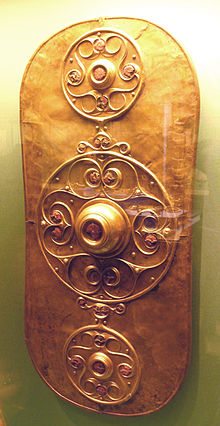
Cornwall, like the rest of the European Iron age, Roman Era and early medieval world, has its share of swords, knives, jewelry, pots, tankards and bones happily strewn across bogs, lakes, rivers, cricks and pools. I first encountered these watery finds in little historical museums in Cornwall, and then later saw more at the Welsh National Museum and National Museum of Scotland. This was some 30 years ago, and the research on European bog finds was just percolating in academic circles and had not reached small Cornish historical societies. Yet even in the 1980's, the museum volunteers told me the swords were possibly votive offerings to (gender undefined) gods.

Three decades and several huge archaeological finds later, and the picture of neolithic, bronze age, iron age, Roman age and modern era sword bunging is much more clear. Flag Fen, in Cambridgeshire, that huge repository of thousands of swords and knives, spans millennia in the sword tossing world! Archaeologists there are finding swords from the bronze age right through to the 14th century. My favorite archaeologist, Francis Pryor, sees this amazing continuity as proof of neolithic religious culture surviving well into modern times.

Pryor goes even farther. Instead of seeing the Christian church as stifling and eradicating pre-Christian beliefs, he points out that in many ways the early church just plopped down next to pagan sights, often with apparent ease. Early British worshipers plopped their swords into pools, went to church, and honored pagan devas turned saint. The Romans, in some but not all instances, persecuted druids, but the early church men and women often were themselves druids. (St. Bridget, daughter of a druid, is not so unusual at all.)

Pryor is somewhat at the forefront of British archaeologists re-writing the Dark Ages: contrary to the written, and biased, historical record, the archeological world can find not one shred of evidence that either the Anglo Saxons or the Vikings arrived in England as conquering armies. Instead, the research in the UK today points instead to massive trade amongst Britain, the Continent and even Byzantine cultures in the east. That trade began before the Romans, and continued without pause after the Romans bopped off. The bloody period of fighting and conquest we all learned about in our text books never happened.

All this archaeological research, just like in Israelite society, points to a far more complex, multicultural and polytheistic world. And a world where religious offerings to water continued unabated across eras. ( See some of Pryor's telly shows here. )

The sword offerings point, again, to a far greater role for women and Goddess than many modern pagans want to embrace. The endless web listings of Celtic Goddesses - all noted as "healing" and "fertility" Goddesses on website after website - make any online feminist research completely barf making. Go ahead and google "Celtic Goddess" yourself: find endless descriptions of Sulis and Coventina and Sequanna and even Brigantia as "water goddesses." That all the just mentioned Goddesses have swords tossed into their wells, pools, bogs and streams just means they were connected to "healing," if you want to believe that.

Francis Pryor, white, male archaeologist that he is, has, thankfully, other ideas. Since most of the boggy finds are swords/knives/jewelry specially made for offering, he neither connects the offerings with war or healing. Instead he believes they were part of denoting status. Want to show your high rank? Order a really amazing bronze sword, and then bung it in a pool to Sulis. Make a really cool iron knife, and drop it in a stream for Brigantia. Roman sword and offering inscriptions, left behind at Hadrian's wall and other sites, almost always mention the fulfilling of vows to the Goddess so honored. We can't "know" what the non-written offerings meant in quite the same way, but that centuries of people made gorgeous swords and shields and knives and jewelry and pots and tankards, and then all bunged them into the water for health - well, even if that is so does not the high status activity point to a greater position for female deity than "fertility goddess?"

And the neo-Celtic groups, now claiming that Celtic goddesses weren't of the same stature as the boys, have a lot of explaining to do. Nobody, nowhere, left thousands of swords in streams for one single male Celtic deity. Hmmmm. Who is high status now??? Given that the offerings do span so many millennia, I would suggest that high ranking women deities were of greater importance than those poor boys who never got a sword at all.

And I admit, for me, with my own learnings in blacksmithing, I find myself seeing swords in quite a new light. My daughter has been learning to smith - faster than I, truth be told, and she is a Society for Creative Anachronism warrior who deeply loves all things sword and knife related. I have spent many an SCA battle sniffing at all the silly sword play. Yet with archaeological research so clearly connecting high status non-martial offerings to female deity, I may have to work a bit harder on knife making the next time I'm at the forge.

Bridget herself has ever been the patron saint of blacksmiths, something Christian and Pagan writers have long tried to explain given our modern attitude as swords not being feminine. Yet the archaeological record is far more complex.

Swords were used as offerings for something that was clearly not martial for several thousand years. And those swords were given to Goddesses.

Tuesday, March 30, 2010

Maman Brigitte and the quest for love


In general, when you work as a spiritual counselor, one of the most frequent questions is the one for romance. Whether tarot cards or past life readings, astrology or alter building, my friends and clients want to know how to find romance. And sure enough, that was the second question for Bridget's Fire. How to find love, Onnen?

Well, we have to do some hermeneutics before approaching love. Romanticized love is one the cornerstones of a racist and heteropatriarchy. Can't get equal pay for equal work? Well, fall in lu-uve. Can't find decent childcare at an affordable price? Fall in lu-uve. Have no health care? Losing your home? Harassed by your boss at work? Fall in lu-uve. Love, that heterosexual construct of capitalism, is offered as a cure-all for all sexist and racist and homophobic and poverty ills of our society.

Yet, love as a force of revolution, acknowledged as such in most tarot decks anyway, is also an important reality. Strip the ideology of white, sexy hunks and wealthy Mr. Darcy's, and you are left with a force that moves mountains.

My friend, seeking advice on romance, has left abusive husbands and fought for her two autistic children. She has stormed through courts protecting her children, and the force of love has pushed her from teenage mom to amazing African American career woman with two master's degrees. Now she wants to try a romance without violence, and wants to know how to find it. And good for her.

Here is where hermeneutics again is useful. I am as fond of the pornography-named-romance novels as anyone, but like watching television, I tread the genre carefully. Yes sexy werewolves fall into heroines' laps in my favorite books, yet in real life full moons do not werewolf romance make. And for all the fun interspecies orgies in the hotter female pornography genre out there, hot sex isn't always as easy as dancing naked under a full moon.

Indeed, I would suggest that "romance" is another word for female pornography, and as my guy friends (gay and straight) point out, they don't confuse porn with real world relationships. One dude stated that he does not expect hot babes to lust after him like the porn he enjoys, and so why do women expect their romances to imitate Twilight and that ilk?

Hmmmm. Good question.

I am going to suggest thinking about and questioning "love" as an important, indeed essential element, of finding right relationships. Given the sexist mess that love-as-ideology is in our culture, I want to push wise women and men to use more thinking time for establishing relationships, and less feeling. My friend is an admirable case in point. That brilliant mind of hers needs to establish as many guidelines and rules for her dating life as she does for her wonderful children, and for her own professional life.

My friend, however, had others object when I pushed her to write down minimum standards and guidelines for romantic relationships. Sure, what I suggest isn't pretty, romantic, or being swept away - and good for that. Instead I want to encourage sweeping away dangerous ideas that keep women and men hurting more than I want what I have called female porn/romance. Real life, including witchcraft, Christianity, paganism, and any other religious endeavor, requires work.

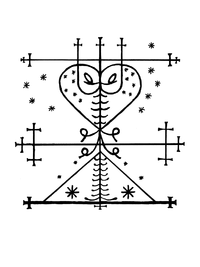
Which leads me to Maman Brigitte. More than Saint Bridget, or the Irish Goddess Bridget so often depicted with flowing blonde hair by new age pagans, Maman Brigitte is a patron voudou saint of graveyards. Go to Maman Brigitte and you are calling on endings, on deaths, on passing. She is a perfect deva for chopping away heterosexist and racist ideas about love. Yet, Maman Brigitte is also a guardian and protector. For my friend and others starting out into the world of dating, a strong protector can't hurt.

Now my devoutly Christian friend worries about creating alters to a voudou orishe. That is fine.

To call on Maman Brigitte one doesn't have to follow voudou, Catholocism or any other pagan/new age path. I urged my friend to create a meditation space, and to offer the spirit of Maman Brigitte's protection a daily cup of tea, or some written dedications and guidelines for the guys she wants to date. A few coins never hurt. A picture of her current crush is good.

In no way does an alter of meditation take away from church or prayer time. In general, I have never found saints, Goddesses, orishes, devas, spirits, or deities at all upset about meditating. And meditating on putting sexism into any graveyard, while calling for a spirit of protection, is a great daily practice.

Saturday, March 20, 2010

Bridget? Brigit? Bride? Ffraid? Brighideach?


Bridget? Brigit? Bride? Ffraid? Brighideach?

I have Protestant friends asking, Onnen, what is this blog of yours? What is Bridget/Bride/Ffraid, and what is Brighideach??

So a little backtracking into ancient times here, for a little explaining.

Go back to the world before the common era, when Romans had some writing going on, but much of Europe was in the dark ages. All across Europe a group of peoples spoke an early form of language that would eventually become old Welsh, and from there you will get the Gaelics - Irish and Scots, Manx is in there with Gaelic, and old Welsh divides into Cornish, Breton over in France, and modern Welsh. Yup I speak some of all those languages!

So back in that soup of early Celtic languages you have these pagan peoples, joined by some common language elements, common crafts, similar burial traditions, and into the written era, a common antipathy to the Roman Empire. Ok, everyone calls it the Celts. Yup you can argue with that name. (It can be another post, ok?) But in that soup of peoples there was one very common thread: lots and lots of worship of maybe deity like thingies, many called something similar to Brid or Brig. You get Brigantia in Britain (which is where the name Britain comes from - an entire modern nation named after a Celtic deity), Brighid in Ireland, Bridghe in Scotland, Ffraid in Wales, Brigandu over in old Gaul, Bricta in eastern France, Brigindo in Switzerland, and through colonization you end of up with Maman Brigitte in Caribbean voudou and Bridang in the Philippines.

Brid or Brig perhaps meant "exalted one," some translations say "fiery one." With Christianity and the beginnings of writing you find stories of Bridghid, where she becomes a patron of hill forts and mountains, and lofty intellectual things like poetry and healing, plus the highest echelon of crafting, blacksmithing. Monks writing down older Irish tales from before Christianity leave Brighid as the daughter of the Dagda (the good one), and daughter of a poet. (A most auspicious child then!) However, the Christians have their own Brighid, now a common era Christian daughter of druids, who claims land in Kildare for a great monastery where flames to Bridget still burn today. Historical pictures of the Saint always show her with a Bishop's staff, a wonderful point showing the historical ordination and status of women in the early church.

So there you have Bridget. Goddess or Saint, or both. Well worth worship, for inspiration or for crafting, for women's aspirations in the church or for healing, for fire or for hilltops. Bridget is a nice bridge between and among pagan and Christian women, who can find something in her famous mantle for everyone.

Bridget's fire, a woven crossroads of women's religious agency.